
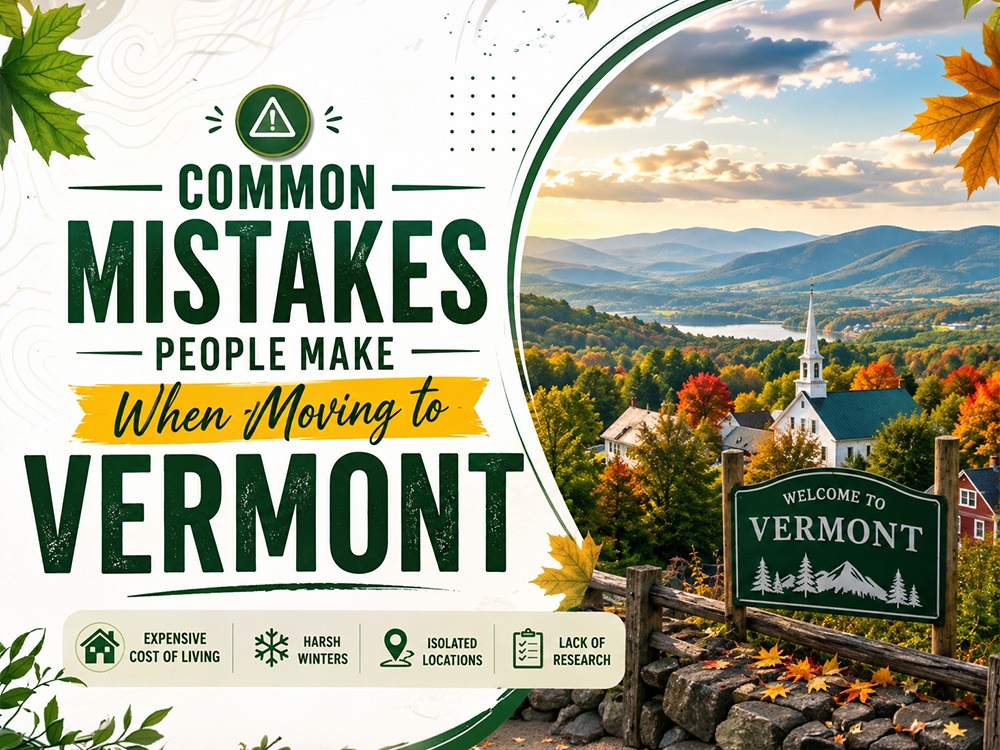
Moving to Vermont is an exciting opportunity for anyone seeking scenic landscapes, charming small towns, and a slower pace of life. From vibrant communities to endless outdoor adventures, the Green Mountain State has something for everyone.
However, relocating without proper planning can lead to unexpected challenges.
If you’re moving to Vermont, understanding what to expect before you arrive can save you time, money, and stress.
This guide covers the most common mistakes new residents make and shares practical tips to help you settle into your new home with confidence.
Things to Know Before Moving to Vermont
One of the biggest mistakes people make is assuming that life in Vermont is similar to other states. While Vermont offers an incredible quality of life, it also has unique characteristics that every newcomer should understand.
Here are some things to know before moving to Vermont:
- Winters are long and snowy in many parts of the state.
- Rural living is common, and some areas have fewer shopping and dining options.
- Reliable transportation is essential, especially during winter.
- Internet service may vary in remote locations.
- Outdoor recreation is a major part of everyday life.
Taking time to research your destination will help you make a smoother transition.
1. Choosing a Location Without Research
Many people choose a town simply because it’s beautiful or affordable. However, every Vermont community offers a different lifestyle.
Before buying or renting a home, consider:
- Commute times
- School districts
- Healthcare access
- Grocery stores and local services
- Internet availability
- Property taxes
Exploring the best places to live in Vermont based on your lifestyle and budget is one of the smartest decisions you can make.
Popular areas include:
- Burlington
- South Burlington
- Essex
- Stowe
- Middlebury
- Montpelier
- Manchester
Each town offers its own mix of amenities, outdoor recreation, and community atmosphere.
2. Underestimating Vermont Winters
One of the biggest surprises for newcomers is Vermont’s winter season.
Heavy snowfall, icy roads, and freezing temperatures require preparation. New residents often forget to:
- Purchase winter tires
- Keep emergency supplies in the car
- Budget for heating costs
- Learn safe winter driving techniques
- Invest in quality winter clothing
Preparing early makes winter much more enjoyable.
3. Ignoring the Cost of Home Maintenance
Many Vermont homes are older and require regular maintenance.
New homeowners should budget for:
- Snow removal
- Heating system servicing
- Roof inspections
- Wood stove maintenance
- Septic system inspections
- Well water testing
Planning for these expenses helps avoid unexpected financial surprises.
4. Expecting Big-City Convenience Everywhere
While Vermont offers wonderful small-town living, not every area has large shopping centers or 24-hour services.
Depending on where you live, you may need to drive farther for:
- Major grocery stores
- Medical specialists
- Entertainment
- Home improvement stores
- Airports
Understanding what to expect when moving to Vermont allows you to choose a location that fits your daily needs.
5. Not Planning for Employment or Remote Work
Many people relocate before securing employment.
If you’re working remotely, confirm:
- High-speed internet availability
- Cell phone coverage
- Dedicated workspace
- Reliable backup internet if needed
If you’re seeking local employment, research industries and commuting distances before making your move.
6. Skipping Visits During Different Seasons
A town that feels perfect during autumn may feel very different in February.
Visit potential neighborhoods during multiple seasons to understand:
- Road conditions
- Winter accessibility
- Local traffic
- Seasonal tourism
- Community activities
This gives a more realistic picture of everyday life.
7. Forgetting to Budget Beyond Home Prices
Housing prices are only one part of relocation costs.
Remember to budget for:
- Closing costs
- Property taxes
- Utility bills
- Heating fuel
- Home insurance
- Moving expenses
- Vehicle registration
- Winter equipment
Having a realistic budget reduces financial stress after your move.
8. Not Getting Involved in the Community
One of Vermont’s greatest strengths is its welcoming communities.
Many newcomers settle in more quickly by:
- Attending local events
- Visiting farmers’ markets
- Joining hiking groups
- Volunteering
- Supporting local businesses
Building local connections helps make Vermont feel like home.
Living in Vermont for Beginners
If you’re living in Vermont for beginners, focus on creating a strong foundation during your first few months.
Take time to:
- Learn local driving conditions.
- Explore nearby parks and hiking trails.
- Find trusted healthcare providers.
- Meet your neighbors.
- Understand seasonal home maintenance.
- Discover local restaurants and businesses.
Being patient and open to Vermont’s slower pace of life will help you enjoy everything the state has to offer.
Vermont Moving Checklist
Before relocating, use this simple Vermont moving checklist:
✔ Research neighborhoods and housing options.
✔ Budget for moving and ongoing expenses.
✔ Prepare your vehicle for winter driving.
✔ Arrange utilities before move-in day.
✔ Update your driver’s license and vehicle registration.
✔ Find healthcare providers and schools if needed.
✔ Confirm internet availability.
✔ Schedule home inspections if purchasing property.
✔ Learn about local weather and emergency preparedness.
✔ Explore your new community after moving.
Final Thoughts
Moving to Vermont can be one of the best decisions you make, but preparation is key. Understanding the things to know before moving to Vermont, researching the best places to live in Vermont, and knowing what to expect when moving to Vermont will help you avoid common mistakes and enjoy a smoother transition.
Whether you’re relocating for work, retirement, or a lifestyle change, careful planning will help you settle into your new community with confidence. Use this guide as your starting point, follow a reliable Vermont moving checklist, and embrace everything the Green Mountain State has to offer.
